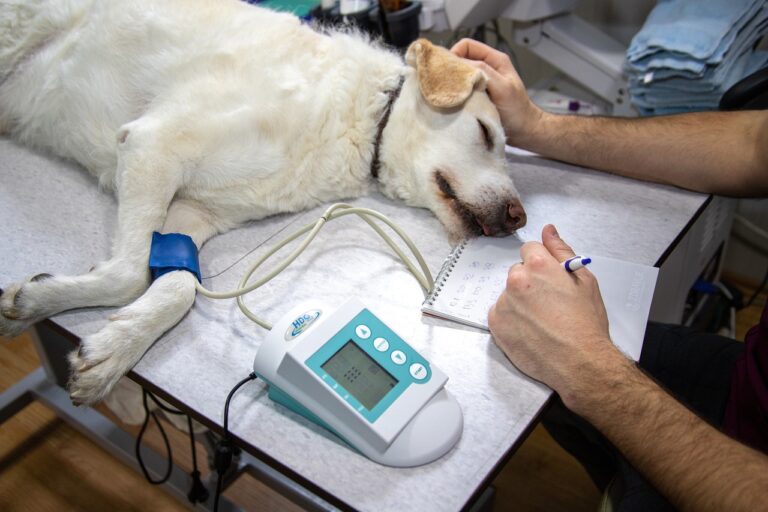
Search “best vets near me” and you’ll get star ratings, which mostly measure how friendly the front desk was and how long the wait felt. Both matter. Neither tells you whether the hospital meets independent standards, whether a real specialist will see your dog’s tumor, or what happens at 2 a.m. when your cat stops breathing normally. A five-star clinic can be the wrong clinic for your problem.
This guide treats “best” as a match between your pet’s situation and a vet’s verifiable qualifications. You’ll find the credentials that are actually audited, the specialist boards behind the letters after a vet’s name, and 30 contacts we checked against official pages: top teaching and nonprofit hospitals, specialist and accreditation finders, poison hotlines and a free pet-loss support line. There’s also a scorecard that rates any clinic in two minutes, and a Bing map locator for accredited hospitals and specialists around you.
Seven Straight Answers Before You Choose a Vet
These are the questions people ask when they’re new in town, unhappy with their current vet, or holding a scary diagnosis. Short answers here; details follow.
Check three things reviews can’t show: an active state license, an independent credential such as AAHA accreditation, and how the clinic handles sick visits and after-hours problems. Then book one wellness visit as a trial.
The hospital volunteered to be evaluated by the American Animal Hospital Association against standards in areas such as patient care, cleanliness and emergency services. Only about 15% of U.S. hospitals hold it.
A specialist is a vet who completed years of extra residency training and passed a board exam. Look for “board-certified” or “Diplomate,” often written as letters such as DACVIM or DACVS.
Often, but not always. Many university and private specialty hospitals accept you directly; others want records from your vet first. Asking your vet for a referral also gets the specialist your history and x-rays.
For complex cases, they offer rare depth: many specialties under one roof, advanced imaging and clinical trials. For routine care, a great local practice is usually faster and more convenient.
Not fully. States are expanding telehealth, but new laws still limit remote prescriptions and require in-person exams for ongoing care. Use video visits for triage and follow-ups.
When you repeatedly leave confused, can’t get sick visits, get pushed toward services without explanations, or can’t get your records. A good vet makes it easy to ask for a second opinion.
The Credentials That Are Actually Checked
A lot of words on clinic websites are marketing. A handful of credentials involve outside evaluation, exams or audits. Learning which is which takes five minutes and changes how you read every clinic page.
| Credential | Who checks it | What it tells you | Where it matters most | How to verify |
|---|---|---|---|---|
| State license | State veterinary board | Legally allowed to practice; discipline history | Every vet, always | State board license lookup |
| AAHA accreditation | American Animal Hospital Association | Hospital-wide standards evaluated on site | Everyday and surgical care | AAHA hospital locator |
| Board certification | AVMA-recognized specialty college | Residency plus a board exam in one field | Cancer, surgery, heart, neuro | VetSpecialists.com, ACVS finder |
| VECCS facility level | Veterinary Emergency and Critical Care Society | Emergency and ICU capability by level | Emergencies and trauma | Ask the hospital which level |
| Fear Free | Fear Free program | Staff trained in low-stress handling | Anxious or aggressive pets | Fear Free practice directory |
| Cat Friendly Practice | Feline Veterinary Medical Association | 130-point feline checklist; Silver or Gold | All cats | CatFriendly.com finder |
When we went through accreditation and certification pages for every hospital on our list, we found that the strongest clinics state their credentials precisely: “AAHA accredited since 1976,” “Level 1 certified by VECCS,” “board-certified in internal medicine.” Vaguer clinics use words like “state-of-the-art,” “premier” or “specialty-level care.” Those phrases aren’t lies, but nobody checks them. When a page uses only adjectives, ask the front desk which outside organization has evaluated the hospital.
AAHA accreditation is voluntary, which is exactly what makes it informative. A hospital pays to be inspected against hundreds of standards and must keep meeting them to stay accredited. The Animal Medical Center in New York, for example, says it has held AAHA status since 1976 and scored 97% of possible points in its most recent evaluation. A clinic without AAHA can still be excellent; it just hasn’t been measured by that yardstick, so you’ll lean more on your own observation.
Board certification is the credential that matters most when the stakes rise. According to the AVMA, there are 22 recognized specialty organizations covering 48 distinct specialties, and more than 16,500 veterinarians hold diplomate status. Becoming one typically takes a one-year internship plus a multi-year residency and a demanding exam. “Special interest in cardiology” from a general practitioner is not the same thing as a board-certified cardiologist, and you’re allowed to ask which one you’re seeing.
Fear Free and Cat Friendly credentials measure something different: how the visit feels to the animal. That isn’t fluff. A cat that arrives terrified has stress-raised blood sugar and blood pressure, which can muddy test results, and a dog that panics may need sedation just to be examined. The Cat Friendly Practice program uses a 130-point self-assessment across 10 areas, from separate waiting spaces to feline-specific handling and anesthesia, and grants Silver or Gold status.
Match the Problem to the Right Specialist
Your regular vet is the quarterback. When a problem is complex, persistent or high-risk, the best next step is usually a board-certified specialist in that exact field. Here’s who handles what.
The specialist squeeze is real, and it shapes how fast you’ll be seen. The Association of American Veterinary Medical Colleges has warned that open specialist positions may outnumber available candidates by as much as four to one. Owners are also searching harder: the American College of Veterinary Surgeons reported that active users of its Find a Surgeon directory rose 53% in the second quarter of this year compared with the same period last year. Translation: call early, ask to be put on a cancellation list, and don’t wait for a problem to become urgent before asking for a referral.
One practical trick we found while reading specialty hospital pages: many have a referral coordinator or a service-specific phone line. Ohio State, NC State and Texas A&M all publish separate numbers for individual services. Calling the service directly, with your vet’s records already sent, often gets you a real answer about wait times in one call instead of three.
Rate Any Vet in Two Minutes
Tick what’s true for the clinic you’re considering, or the one you already use. The scorecard weighs each factor by how much it tends to affect your pet’s care and your experience, and tells you what to ask about next.
Tick the boxes that apply. The score is our own weighting, not an official rating.
We built the weighting around what goes wrong most often in owner complaints and in the national data. In the PetSmart Charities and Gallup study of nearly 2,500 owners, 73% of those who turned down care over cost were never offered a lower-cost alternative. That’s why “written estimates with more than one option” and “explains clearly” carry the most weight here. A technically brilliant vet who never explains choices leaves you making decisions blind.
The pet selector shifts the weights. For cats and anxious pets, low-stress handling credentials count for more, because a frightened animal is harder to examine well. For exotics, the scorecard reminds you to ask whether the vet regularly treats your species, since many general practices see few rabbits, birds or reptiles; there’s a dedicated specialty, the American Board of Veterinary Practitioners’ exotic companion mammal and avian certifications, for exactly this.
30 Top Hospitals, Finders and Hotlines to Call
Twenty-two hospitals known for depth of specialty and emergency care, five finders that verify credentials for you, two poison hotlines and a free pet-loss support line. Every number matches the organization’s own published contact page as of our check.
| # | Where | Type | Phone or link | Why it stands out |
|---|---|---|---|---|
| 1 | ASPCA Animal Poison Control | 24/7 hotline | 888-426-4435 | Toxicology experts; fee may apply |
| 2 | Pet Poison Helpline | 24/7 hotline | 855-764-7661 | $89 per incident, follow-ups included |
| 3 | AAHA hospital locator | Finder | aaha.org | Only accredited hospitals listed |
| 4 | VetSpecialists.com | Finder | vetspecialists.com | Board-certified specialists by field |
| 5 | ACVS Find a Surgeon | Finder | acvs.org | Board-certified surgeons only |
| 6 | Fear Free practice directory | Finder | fearfreepets.com | Low-stress certified practices |
| 7 | Cat Friendly Practice finder | Finder | catfriendly.com | Silver and Gold feline practices |
| 8 | UT Veterinary Social Work Helpline | Support line | 865-755-8839 | Pet loss and hard decisions; weekdays 10–5 ET |
| 9 | Animal Medical Center, New York | Nonprofit hospital | 212-838-8100 | 24/7; AAHA since 1976 |
| 10 | Angell Animal Medical Center, Boston | Nonprofit hospital | 617-522-7282 | VECCS Level 1 emergency facility |
| 11 | Penn Vet Ryan Hospital, Philadelphia | Teaching hospital | 215-746-8911 | Level 1 trauma; appts 215-746-8387 |
| 12 | Cornell University Hospital for Animals, NY | Teaching hospital | 607-253-3060 | Press 1 for emergencies |
| 13 | Cornell University Veterinary Specialists, CT | Specialty hospital | 203-595-2777 | Specialty and emergency in Stamford |
| 14 | Tufts Foster Hospital, North Grafton MA | Teaching hospital | 508-839-5395 | 24/7 ER (option 3); specialty by referral |
| 15 | Ohio State Veterinary Medical Center | Teaching hospital | 614-292-3551 | Separate lines for each specialty |
| 16 | Michigan State Veterinary Medical Center | Teaching hospital | 517-353-5420 | Small animal line answers 24 hours |
| 17 | Purdue Veterinary Hospital, IN | Teaching hospital | 765-494-1107 | Primary care and 24/7 emergencies |
| 18 | Illinois Veterinary Teaching Hospital | Teaching hospital | 217-333-5300 | 24/7 ER; primary care 217-244-2555 |
| 19 | UW Veterinary Care, Madison WI | Teaching hospital | 608-263-7600 | Will discuss costs before you arrive |
| 20 | University of Minnesota Veterinary Medical Center | Teaching hospital | 612-626-8387 | Lewis Small Animal Hospital |
| 21 | Iowa State Lloyd Veterinary Medical Center | Teaching hospital | 515-294-4900 | 24-hour emergency; call ahead |
| 22 | UC Davis Veterinary Hospital, CA | Teaching hospital | 530-752-1393 | 24/7 ER; telemedicine for CA residents |
| 23 | Colorado State Veterinary Teaching Hospital | Teaching hospital | 970-297-5000 | Flint Animal Cancer Center on site |
| 24 | WSU Veterinary Teaching Hospital, Pullman | Teaching hospital | 509-335-0711 | AAHA accredited since 1983 |
| 25 | Texas A&M Small Animal Teaching Hospital | Teaching hospital | 979-845-2351 | Texas’s only vet teaching hospital |
| 26 | UF Small Animal Hospital, Gainesville | Teaching hospital | 352-392-2235 | Open-heart mitral valve repair for dogs |
| 27 | Auburn Bailey Small Animal Hospital, AL | Teaching hospital | 334-844-4690 | 24/7 ER; 13 clinical services |
| 28 | University of Tennessee Veterinary Medical Center | Teaching hospital | 865-974-8387 | After-hours ER; daytime ER by referral |
| 29 | Virginia Tech Veterinary Teaching Hospital | Teaching hospital | 540-231-4621 | Appointments and emergencies |
| 30 | NC State Veterinary Hospital, Raleigh | Teaching hospital | 919-513-6911 | Emergency line; service lines online |
How we chose these 30
We didn’t rank hospitals by star ratings or paid placements. University teaching hospitals made the list because they combine many board-certified specialists, 24-hour emergency care and advanced imaging under one roof, and because their cases feed the research that every other vet relies on. The two independent nonprofit hospitals, the Animal Medical Center in New York and Angell in Boston, made it because of their published credentials: decades of AAHA accreditation in one case and Level 1 VECCS certification in the other. The finders made it because each lists only people or practices that an outside organization has checked, which is exactly what a general map search can’t do.
What this list isn’t: a ranking of your neighborhood clinic. The best everyday vet for most pets is a nearby practice you can reach quickly and trust, and plenty of excellent ones carry no famous name. Use these hospitals for second opinions and complex care, and use the scorecard above to judge the clinic down the road.
What we found going through every hospital’s patient pages
We read the client pages for each of these 22 hospitals before listing them, and the differences that matter to owners are mostly practical. Some keep one number for everything; Virginia Tech and Purdue, for instance, route both appointments and emergencies through a single line, while Ohio State, NC State and Texas A&M publish separate lines for individual specialties. Some require a referral for specialty care, as Tufts does, while others, including UC Davis and Michigan State, let owners book directly through the main line.
Emergency access isn’t uniform either. Tennessee’s small animal ER takes walk-ins without a referral only after hours, on weekday evenings until midnight and on weekends and holidays from 8 a.m. to midnight; during the weekday business day, emergencies there are by referral. Cornell asks callers to press 1 for emergencies. Penn Vet asks people to call its ER line before driving in so staff can prepare. Knowing these details before a crisis saves real minutes.
A few hospitals have distinctive strengths worth knowing about. The University of Florida says it was the first U.S. veterinary center to run a dedicated open-heart mitral valve repair program for dogs. Colorado State houses the Flint Animal Cancer Center. Penn Vet’s Ryan Hospital was the first university hospital certified as a Level 1 veterinary trauma facility, and Angell in Boston holds Level 1 certification as an emergency and critical care facility. Several, including Cornell, Florida, Ohio State and Texas A&M, run clinical trials that can give eligible pets access to treatments not yet widely available.
Bing Map Locator: Top-Rated Vets and Specialists Near You
Choose what you’re looking for and open Bing Maps around your location. Your location is used only to build the map link and isn’t stored or sent anywhere else.
Who Owns Your Vet, and Why It’s Worth Asking
The clinic name on the sign doesn’t always tell you who owns it. Ownership doesn’t decide quality, but it can affect pricing, staff turnover and how decisions get made, so it’s a fair question to ask.
A PBS NewsHour report this summer laid out the shift. Corporations owned roughly a tenth of vet practices a decade ago; estimates now run from about 30% to as much as half, and about three-quarters of specialty and emergency care. One company, Mars, owns three veterinary groups and around 2,000 U.S. practices. Critics argue that consolidation reduces local competition and pushes prices up. Industry groups point to better diagnostics, a workforce shortage and rising supply costs. Economists interviewed for the piece said the exact effect of private ownership on prices is hard to measure.
Here’s what we’d actually do with that information. Corporate-owned hospitals often have real advantages: shared specialists, modern equipment, longer hours and, in some networks, their own charity funds. Independent practices can offer more continuity, with the same vet year after year. Neither label guarantees anything. Ask two questions instead: “How long have your vets been here?” and “If I need a specialist, do you refer only within your network, or to whoever’s best for my pet?” A good answer to the second question matters more than who owns the building.
Online Vets: What They Can and Can’t Do
Video vet visits are spreading fast, and state laws are catching up. They’re excellent for some jobs and legally limited for others, so it helps to know the rules before you pay.
Rhode Island’s governor signed a law on June 23 that lets vets establish a veterinarian-client-patient relationship by live video, with conditions. The vet must hold a Rhode Island license, the owner must consent, the same standard of care applies as in person, and services and standard charges must be posted online. The first prescription is capped at 30 days, one 30-day virtual renewal is allowed, and a second renewal requires an in-person exam. Controlled drugs need in-person care. Several other states have their own versions, and many are still unclear, which is why the honest answer to “is this online vet legit?” depends on where you live.
We found the most useful way to think about online vets is as a front door, not a home. They’re excellent for deciding whether a problem can wait until morning, for behavior coaching, for follow-ups after surgery and for reviewing a treatment plan you’ve already been given. They can’t palpate an abdomen, listen to a heart, take an x-ray or feel a lump. If an online vet is your only vet, you’ll still need an in-person clinic for anything beyond the basics, so set one up now rather than during a crisis.
Which Situation Sounds Like Yours?
“Best vet” means something different when your dog has a new lump than when you’ve just moved. Find your situation for the first two moves.
Ask your vet for a referral to a board-certified veterinary oncologist, and send biopsy results, bloodwork and imaging ahead of the appointment. Ask the oncologist about goals as well as treatments: quality of life, expected time with and without treatment, and side effects. Veterinary chemotherapy is usually dosed to keep pets feeling well, which surprises many owners. University hospitals often run clinical trials, and Colorado State’s Flint Animal Cancer Center is one of the best-known programs.
Procedures like TPLO are commonly done by board-certified surgeons and by some experienced general practitioners. Ask who will perform it, how many they do a year, what their complication rate is, and what rehab looks like. Use the ACVS directory to see who’s certified near you, and get a second opinion on the type of surgery if you’re offered only one option.
Look up your nearest true 24/7 hospital today and save the number in your phone, because “urgent care” clinics close at night. If you have a choice, a VECCS-certified facility or a university ER has ICU depth for the hardest cases. Call ahead on the way, and for suspected poisoning call a hotline first.
Fear Free and Cat Friendly practices plan visits around reducing stress: quieter rooms, slower handling, treats, and sometimes calming medication prescribed before the visit. Ask your vet about pre-visit medication for severe cases, practice carrier training at home, and book the first or last slot of the day when it’s calmest. For aggression or serious anxiety, a board-certified behaviorist (ACVB) can help in ways general training can’t.
Request your pet’s full records from your old vet before you leave, including vaccine certificates, lab results and imaging. Shortlist two or three AAHA-accredited clinics near home, call each with the same three questions (Do you offer same-day sick visits? Who handles after-hours calls? How do I reach my vet with a question?), and book a wellness visit at the best answer. Find your nearest 24/7 ER the same week.
Many general practices see few exotics, and these species hide illness until it’s advanced. Ask a clinic how many of your species they see each week and whether a vet there holds an exotic or avian certification from the American Board of Veterinary Practitioners. University hospitals, including Cornell and Illinois, treat exotics, and the Bing locator above can search for exotic vets near you.
Tell your vet promptly about any new wobbliness, appetite loss or behavior change after starting a drug. The FDA, for example, told veterinarians in December 2024 about adverse event reports for the dog arthritis drug Librela, including loss of coordination, lethargy and appetite changes, and recommended adding them to the label. That doesn’t mean the drug is wrong for every dog; it means monitoring matters. You or your vet can report a suspected reaction to the drug maker or to the FDA.
A great vet will talk through quality of life honestly and explain options such as hospice care, in-clinic euthanasia and home euthanasia. If you need someone to talk to, the University of Tennessee’s Veterinary Social Work Helpline offers support on weekdays from 10 a.m. to 5 p.m. Eastern. Michigan State’s hospital also runs a pet loss support group through its veterinary social work program.
Questions to Ask Before You Commit
Call two or three clinics and ask the same questions. The quality of the answers, and how willingly they’re given, tells you a lot.
Is the hospital AAHA accredited? How soon can a sick pet usually be seen? Who handles calls after hours, and which ER do you work with? How do I reach my vet with a quick question? Do you give written estimates with options? Do you have board-certified specialists on staff, and where do you refer? How do you handle anxious pets? Can I stay with my pet during exams? Do you send records and x-rays to other vets promptly? How long have your veterinarians been with the practice?
A clinic that won’t say who handles after-hours problems. Treatments recommended without explanation of what they’re for. No written estimates. Resistance to a second opinion or to sending records. A vet whose license you can’t find on your state board’s site. Any one of these deserves a direct question; two or three are a reason to keep looking.
Concerns about a vet’s conduct or competence go to your state veterinary licensing board, which can investigate and discipline licensees. Suspected drug side effects can be reported to the manufacturer or to the FDA. Problems with a pet food can be reported to the FDA through its Safety Reporting Portal.
Our Verdict
Pick an everyday vet on communication and access first, and confirm an independent credential such as AAHA accreditation. Save your nearest true 24/7 emergency hospital before you need it. When a diagnosis is serious, ask for a board-certified specialist and use VetSpecialists.com or the ACVS directory to find one. For cats and fearful pets, add Cat Friendly or Fear Free to your list.
Save two numbers in your phone: your nearest 24/7 emergency hospital and a pet poison hotline. In a crisis, those are the calls that matter, and looking them up while your pet is in trouble costs time you don’t have.
Questions people still ask
Are online reviews a good way to pick a vet?
They’re useful for spotting patterns in communication, wait times and billing. They’re poor at judging medical quality, so pair them with a credential check and your own first visit.
Is an AAHA-accredited vet more expensive?
Not necessarily. Prices depend on location and services more than accreditation. Accreditation tells you the hospital meets audited standards; ask for estimates either way.
Can I see a university vet hospital without a referral?
Often yes for emergencies and some services. UC Davis and Michigan State, for example, let owners book directly; Tufts requires a referral for specialty appointments. Call and ask.
How do I check a vet’s license?
Search your state’s veterinary medical board website for a license lookup. It shows whether the license is active and often lists any disciplinary actions.
What does “DACVIM” or “DACVS” mean after a vet’s name?
Diplomate of the American College of Veterinary Internal Medicine or Surgeons. It means the vet completed residency training and passed that college’s board exam.
Should my cat see a cat-only clinic?
Not required, but cat-only clinics and Cat Friendly practices reduce stress, which can make exams and test results more reliable. Many mixed practices also hold Cat Friendly status.
How do I get a second opinion without upsetting my vet?
Just ask for your records to be sent. Good vets expect second opinions on big decisions and won’t take it personally. Many specialists welcome a call from your regular vet.
Are house-call vets as good as clinics?
They’re great for exams, vaccines, anxious pets and end-of-life care. For x-rays, surgery and many lab tests, you’ll still need a clinic, so many house-call vets partner with one.
How this page was checked. Phone numbers and links come from each organization’s own website or published patient materials as of October 27. Credential details come from AAHA, the AVMA, the Feline Veterinary Medical Association, Fear Free and VECCS-certified hospitals’ announcements. Workforce figures come from the AAVMC and ACVS; ownership estimates from PBS NewsHour reporting; survey figures from the AVMA and the PetSmart Charities–Gallup study; telehealth details from Rhode Island’s newly signed law; drug safety details from the FDA. The scorecard and illustrations are our own. This page is general information, not veterinary advice.
This page is independent and not affiliated with any hospital, school or organization listed. If your pet is in distress, contact a veterinarian or emergency hospital now.
Key sources: AVMA · AAHA · AAVMC · FDA · Gallup · PBS NewsHour